Best Dietitian for Migraine in Rabale.
🥗 Nutrition in Migraine: Healing from Within
Migraine is not just a neurological condition—it is often closely linked to dietary habits and nutritional deficiencies. While medications provide temporary relief, the right nutrition can play a powerful role in reducing the frequency, intensity, and duration of migraine attacks.
🌿 How Nutrition Impacts Migraine
Certain foods can act as triggers, while others support brain health and help prevent migraines. Imbalances in nutrients like magnesium, riboflavin (Vitamin B2), and omega-3 fatty acids are commonly associated with migraines.
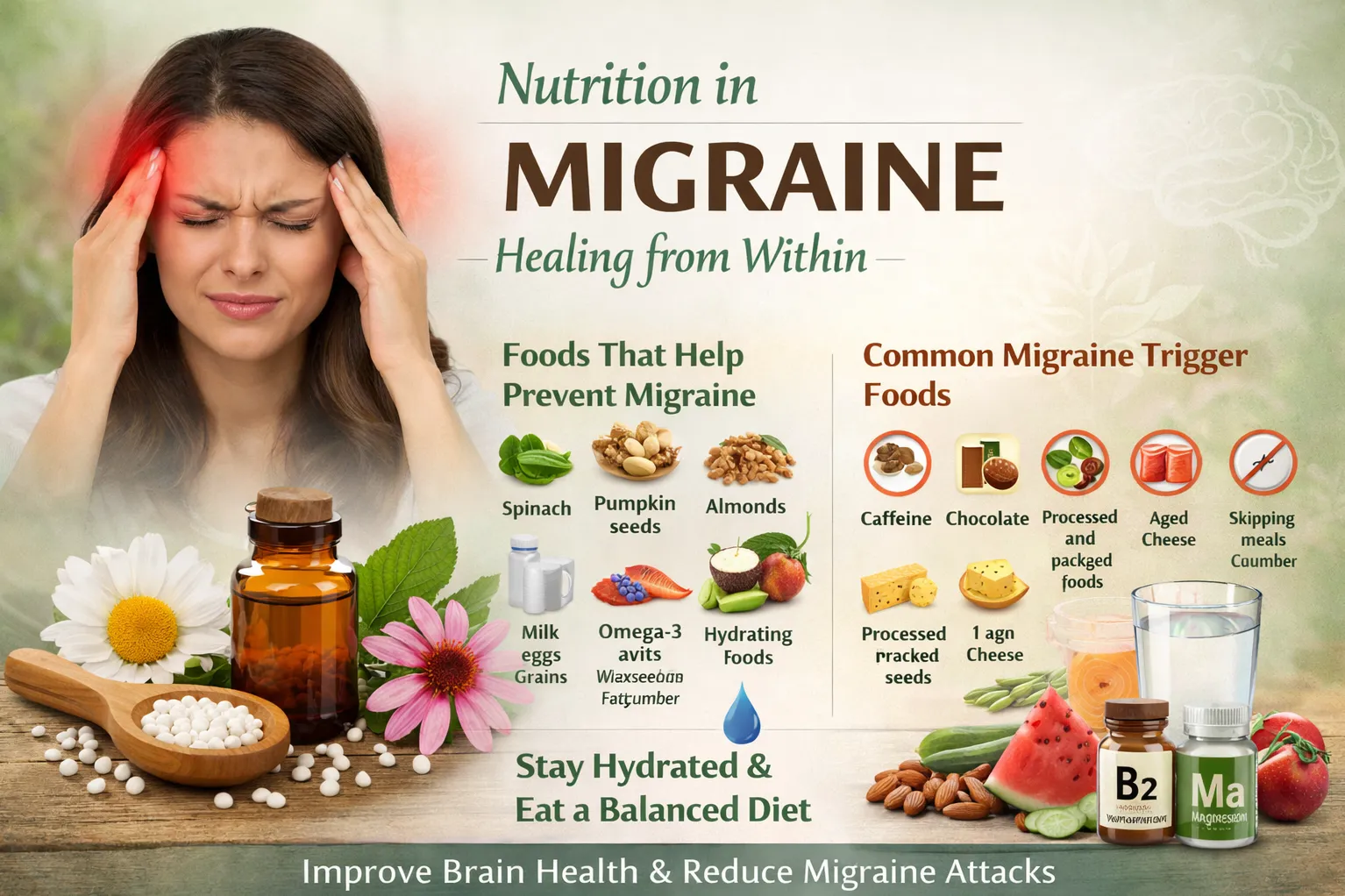
🍎 Foods That Help Prevent Migraine
Including the right foods in your daily diet can make a significant difference:
Magnesium-rich foods: Spinach, pumpkin seeds, almonds
Riboflavin sources: Milk, eggs, whole grains
Omega-3 fatty acids: Walnuts, flaxseeds, fatty fish
Hydrating foods: Coconut water, fruits like watermelon and cucumber
These nutrients help in relaxing blood vessels, reducing inflammation, and improving brain function.
⚠️ Common Migraine Trigger Foods
Identifying and avoiding trigger foods is equally important:
Caffeine (excess tea/coffee)
Chocolate
Processed and packaged foods
Aged cheese
Skipping meals or fasting
Note: Triggers may vary from person to person.
💧 Hydration: The Forgotten Key
Dehydration is one of the most common yet overlooked causes of migraine. Ensure you consume adequate water throughout the day to prevent headaches.
🌸 Practical Dietary Tips
Eat meals at regular intervals
Avoid long gaps between meals
Maintain a food diary to track triggers
Prefer fresh, home-cooked meals over processed foods
🌿 A Holistic Approach to Migraine
Nutrition, when combined with proper lifestyle and personalized care, can significantly improve migraine management. A balanced diet not only reduces migraine episodes but also enhances overall health and well-being.
Keywords